 The Waterlily Bear
Growing Tips For Various Water Iris Species
Jun/09/26
Water Iris Species: Origins, Growth Habits, and How To Grow Them
Author: The WaterlilyBear - Russell T. BaerLast Updated: June 9th, 2026
Water irises are among the most elegant plants you can grow in your aquatic garden. Several distinct species are commonly grown by tub and pond gardeners, each with its own native range, preferred water depth, flowering period and growth character. Knowing which species tolerate standing water and which prefer moist-but-not-submerged soil is essential before you decide whether to plant one alongside your water lily in a tub water garden - or keep it in a separate, dedicated container.
Choosing the Right Iris for Your Tub Garden
If you want to add an iris directly to a tub water garden already home to a water lily, Blue Flag, Southern Blue Flag and Yellow Flag are your most compatible choices. They are genuinely semi-aquatic and handle the consistently submerged wet conditions without complaint. Louisiana water irises in general are tolerant of constantly wet feet.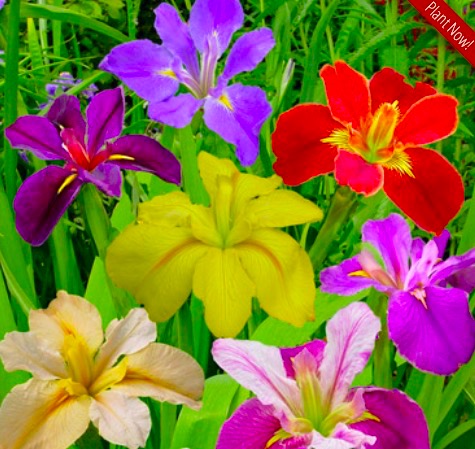
Get Water Iris Plants or Seeds Online
Louisiana Water Iris Plant Collection
View on Amazon
#AD
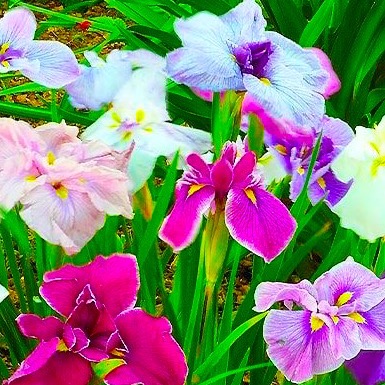
Japanese and Siberian irises are more emergent - 'Living On The Edge' of ponds with roots only seasonally submerged - and their rhizomes and crowns kept WELL ABOVE the waterline. They may require their own dedicated containers where you can fine-tune water levels across the seasons. Growing them in a separate pot set on bricks or a shelf at the pond's edge allows you to lower or raise the rhizome and root water levels as each species demands, giving you the best chance of strong bloom and long-term plant health. The major water iris species grown in North American gardens include:
- Northern and Southern Blue Flag Irises
- European Yellow Flag Iris
- Louisiana Iris
- Japanese Iris
- Siberian Iris
- Pseudata Iris Hybrids
Blue Flag Iris
Native to wetlands and marshy meadows across eastern and central North America, Blue Flag (Iris versicolor) is one of the most cold-hardy and reliably aquatic of all the iris species. It grows in clumping fans of upright, sword-shaped foliage reaching two to three feet tall and produces violet-blue flowers with distinctive yellow and white markings at the throat. In the wild it grows along pond edges, in ditches and stream banks where roots are frequently submerged. In the tub garden, Blue Flag tolerates standing water of two to four inches over the crown and coexists happily alongside water lilies without competing aggressively. It is an excellent choice for a shared container.Southern Blue Flag Iris
The Southern Blue Flag (Iris virginica) is Blue Flag's close cousin, native to the coastal wetlands and swamps of the southeastern United States. It is slightly more tolerant of heat and less cold-hardy, making it particularly well-suited to Zone 6 through Zone 9 gardens. Growth habit is similar — upright fans, two to three feet tall, with lavender-blue flowers. Like I. versicolor, Southern Blue Flag is genuinely semi-aquatic and handles standing water over the crown comfortably. It is a solid companion plant for a water lily tub, especially in warmer Southern climates.Yellow Flag Iris
Originally from Europe, western Asia, and North Africa, Yellow Flag (Iris pseudacorus) is the most aggressive aquatic iris species commonly grown in water gardens. It thrives in standing water up to six inches or more over the crown and can spread rapidly by seed and rhizome in open water situations. While its bold yellow flowers are striking, this species is considered invasive in many parts of North America and should be managed carefully in natural ponds. In a contained tub garden it can grow alongside a water lily, but its vigorous spreading habit means it should be kept in its own pot even when submerged in a shared container.Louisiana Iris
Louisiana irises are not a single species but a complex of five native species — primarily Iris fulva, Iris giganticaerulea, and Iris brevicaulis — native to the Gulf Coast wetlands and river bottomlands of Louisiana and neighboring states. Their modern hybrids offer an extraordinary range of colors from copper and red through white, purple, and near-black. Louisiana irises prefer moist to wet soil and will tolerate shallow standing water of one to two inches over the crown during the growing season, but they do not like prolonged deep submersion. They perform best in a dedicated container where water levels can be lowered slightly during dormancy. Not the easiest companion for a standard water lily tub.Japanese Iris
Order Water Iris Plants and Seeds Online
Japanese Water Iris Collection
View on Amazon
#AD